
If you’ve ever stood in front of a skincare shelf overwhelmed by face washes all claiming to fight acne — you already know the problem. Most products either over-dry your skin, irritate it, or simply don’t deliver on pore-cleansing promises.
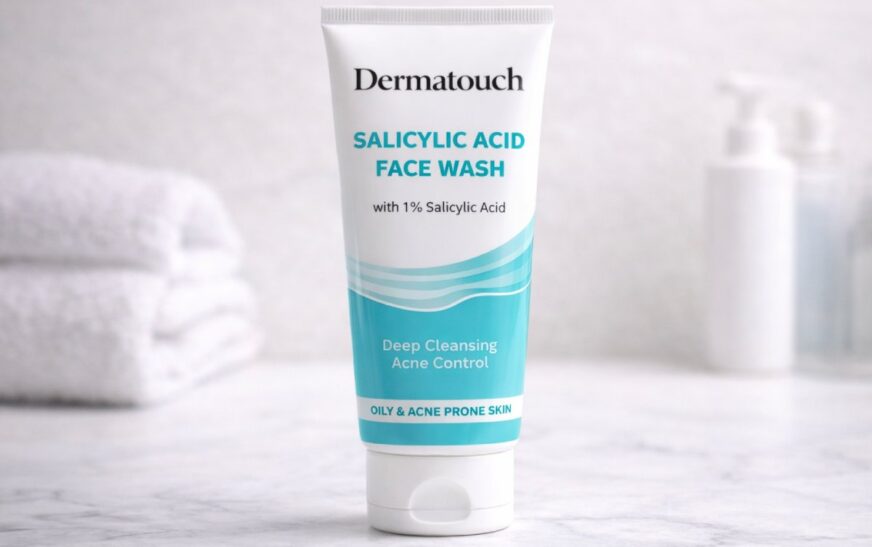
Dermatouch Salicylic Acid Face Wash approaches this differently. It leads with one of dermatology’s most clinically validated acne-fighting ingredients — salicylic acid — and builds a formula around it designed for consistent, daily use on Indian skin.
Here is everything you need to know before adding it to your routine.
What Is Dermatouch Salicylic Acid Face Wash?
Dermatouch Salicylic Acid Face Wash is a BHA (beta hydroxy acid)-based facial cleanser formulated with salicylic acid as its primary active ingredient. It is dermatologist-tested and designed for daily use on oily, acne-prone, and combination skin types.
Quick Definition: A pH-balanced, salicylic acid-powered face wash that exfoliates inside pores, dissolves excess sebum, reduces blackheads and whiteheads, and helps prevent acne — while maintaining the skin’s natural moisture barrier.
Unlike physical scrubs that exfoliate only the surface, salicylic acid is oil-soluble — meaning it travels inside the pore to break down the sebum and dead skin cell buildup that causes congestion at the root.
The Science Behind Salicylic Acid: Why Dermatologists Recommend It
Salicylic acid is a beta hydroxy acid (BHA) derived from willow bark. It has been used in dermatology for over five decades — and remains one of the most rigorously studied topical ingredients for acne and oily skin.
Here is what makes it uniquely effective:
Oil-soluble chemistry: Unlike AHAs (alpha hydroxy acids) which are water-soluble and work on the skin’s surface, salicylic acid is oil-soluble. This allows it to penetrate sebaceous follicles and work from inside the pore — where acne actually begins.
Keratolytic action: Salicylic acid loosens and dissolves the bonds between dead skin cells (corneocytes) inside pores, preventing the build-up that leads to blackheads, whiteheads, and comedonal acne.
Anti-inflammatory properties: Beyond exfoliation, salicylic acid actively reduces redness and inflammation around existing breakouts — making it both preventative and corrective.
Sebum regulation: With consistent use, salicylic acid helps normalize sebum production in overactive sebaceous glands — directly addressing the root cause of shine and congestion in oily skin.
A 2022 review in the Journal of the American Academy of Dermatology confirmed salicylic acid at 0.5–2% concentration is clinically effective for reducing both inflammatory and non-inflammatory acne lesions with a strong safety profile for long-term daily use.
For a thorough understanding of how BHAs work at a cellular level, Healthline’s expert-reviewed salicylic acid guide is one of the most trusted, dermatologist-verified resources available — breaking down the science in plain language.
Who Is Dermatouch Salicylic Acid Face Wash For?
This face wash is best suited for:
- Oily skin — controls sebum production and reduces mid-day shine
- Acne-prone skin — targets blackheads, whiteheads, and recurring pimples at the pore level
- Combination skin — deep-cleans the oily T-zone without over-drying drier cheek areas when used correctly
- Skin with enlarged pores — regular use minimises pore appearance over time
- Post-summer or monsoon skin recovery — Indian climate causes excess sweat and sebum buildup; salicylic acid is particularly relevant here
- Teenagers and young adults — hormonal acne is one of the most common concerns in the 14–28 age group, where salicylic acid cleansers show consistent clinical benefit
Who Should Avoid or Use With Caution?
- Dry or very dehydrated skin — salicylic acid can exacerbate dryness and flakiness; use a hydrating cleanser instead
- Sensitive or reactive skin — start with once-daily use and patch test; discontinue if stinging, peeling, or redness persists beyond 1 week
- Pregnant or breastfeeding women — consult a dermatologist before using salicylic acid products during pregnancy; topical use is generally considered low-risk but medical guidance is recommended
- Those with aspirin (salicylate) allergies — avoid salicylic acid products entirely
- Post-procedure skin — avoid after chemical peels, laser treatments, or dermabrasion until skin has fully healed
Key Ingredients in Dermatouch Salicylic Acid Face Wash
| Ingredient | Concentration | Function | Skin Benefit |
|---|---|---|---|
| Salicylic Acid (BHA) | 0.5–2% | Chemical exfoliant, keratolytic | Unclogs pores, prevents acne, reduces blackheads |
| Niacinamide | ~5% | Anti-inflammatory, brightening | Fades post-acne marks, controls oil, reduces redness |
| Aloe Vera Extract | — | Soothing, hydrating | Calms irritation from BHA activity |
| Glycerin | — | Humectant | Retains moisture, prevents over-drying |
| Tea Tree Oil | — | Antimicrobial | Kills acne-causing bacteria (C. acnes) |
| Zinc PCA | — | Sebum regulator | Controls shine, minimizes pore appearance |
| Allantoin | — | Skin-conditioning | Reduces sensitivity and post-cleanse tightness |
| Panthenol (Vitamin B5) | — | Barrier support | Maintains hydration during active exfoliation |
The combination of salicylic acid with niacinamide is particularly well-designed. While BHA exfoliates and unclogs pores, niacinamide simultaneously repairs the skin barrier and reduces the post-inflammatory hyperpigmentation (PIH) that often lingers after acne resolves — a critical concern for Indian skin tones.
Benefits of Dermatouch Salicylic Acid Face Wash
1. Deep Pore Exfoliation — Not Just Surface Cleansing The oil-soluble nature of salicylic acid means it penetrates inside follicles and dissolves the sebum-dead cell mixture at the source. Surface cleansers wash away what’s on top; this one works from within the pore.
2. Reduces Blackheads and Whiteheads Visibly With consistent twice-daily use over 4–6 weeks, most users see a measurable reduction in blackhead density — particularly in the nose and chin area. This is a direct result of salicylic acid’s keratolytic action on comedones.
3. Controls Excess Oil for 6–8 Hours Zinc PCA combined with salicylic acid’s sebum-normalizing effect results in noticeably reduced shine throughout the day — a significant benefit in India’s warm, humid climate where mid-day oiliness is almost universal for oily skin types.
4. Fades Post-Acne Dark Spots Over Time Niacinamide at 5% is clinically proven to reduce melanin transfer to skin cells — directly addressing the dark spots that remain after acne heals. This makes Dermatouch Salicylic Acid Face Wash more than a cleanser; it is an active participant in evening skin tone.
5. Prevents Future Breakouts By keeping pores clear on a daily basis, salicylic acid disrupts the cycle of congestion that leads to new pimples. Prevention is significantly more effective than reactive spot treatment.
6. Calms Redness Around Active Breakouts Salicylic acid’s anti-inflammatory properties reduce the visible redness and swelling of active pimples — even with just the contact time during cleansing.
7. Lightweight, Non-Stripping Cleanse Allantoin, glycerin, and panthenol in the formula counterbalance salicylic acid’s exfoliating action — preventing the tight, dry feeling that poorly formulated BHA cleansers often cause.
Drawbacks and Honest Limitations
No face wash is a complete acne solution in isolation. Here is what to know:
- Purging phase is normal and expected — in weeks 1–2, salicylic acid accelerates cell turnover and brings congestion to the surface. Mild breakouts during this period are normal, not a sign the product is wrong for you
- Not a standalone treatment for moderate-to-severe acne — active cystic or nodular acne requires prescription treatments (benzoyl peroxide, antibiotics, retinoids, or isotretinoin) alongside a salicylic acid cleanser
- Results are not immediate — minimum 4 weeks of consistent use before judging efficacy; 8–12 weeks for full results
- Cannot be combined carelessly with other strong actives — using alongside high-percentage AHAs, retinoids, or benzoyl peroxide simultaneously increases irritation risk; introduce gradually under guidance
- Dry skin types will likely experience flaking — the formula is designed for oily to normal skin; dry skin needs a different cleanser approach
How to Use Dermatouch Salicylic Acid Face Wash Correctly (Step-by-Step)
Technique matters as much as the product itself with BHA cleansers. Contact time in particular is often overlooked.
Step 1: Wet face with lukewarm water Lukewarm water softens the skin’s surface and opens pores slightly — improving salicylic acid’s ability to penetrate effectively.
Step 2: Dispense a 5–10 paise coin-sized amount More product does not mean better results. The right quantity creates a light lather that covers the full face without wastage.
Step 3: Apply and massage in gentle circular motions for 60 full seconds This is the most commonly skipped step. Salicylic acid needs contact time to exfoliate effectively. The 60-second massage ensures the active ingredient has adequate time to work on the pore surface before rinsing. Use the pads of your fingers — not nails or a rough brush.
Step 4: Pay extra attention to the T-zone and chin These are the highest-sebum zones for most oily and combination skin types. Spend an additional 10–15 seconds gently massaging these areas.
Step 5: Rinse thoroughly with cool water Cool water helps constrict pores after cleansing and rinses away all product residue. Ensure no cleanser remains, especially along the hairline and jawline.
Step 6: Pat dry with a clean, soft towel Never rub. Friction on post-cleanse skin — especially BHA-active skin — increases irritation risk and can aggravate existing breakouts.
Step 7: Apply toner and moisturizer within 60 seconds The 60-second rule: apply your next skincare step before skin fully dries to seal in hydration before the salicylic acid’s mild exfoliating action begins working on the surface.
Recommended Frequency:
| Skin Type | Frequency |
|---|---|
| Oily / Acne-prone | Twice daily — AM + PM |
| Combination | Once daily — PM; gentle rinse in AM |
| Sensitive / Reactive | Once daily — PM only; monitor for 2 weeks |
| Dry skin | Not recommended |
Building the Right Routine Around Dermatouch Salicylic Acid Face Wash
The cleanser is the foundation — what you layer after it determines the full result.
Morning Routine:
- Dermatouch Salicylic Acid Face Wash
- Alcohol-free hydrating toner (with hyaluronic acid or centella asiatica)
- Niacinamide serum (if not already in cleanser — double the brightening benefit)
- Lightweight, non-comedogenic moisturizer
- Broad-spectrum SPF 50 PA++++ sunscreen — non-negotiable
Evening Routine:
- Double cleanse if wearing makeup or SPF (micellar water first, then salicylic acid face wash)
- BHA/AHA toner (optional, 2–3 times a week maximum — not every night)
- Retinol or niacinamide serum
- Heavier moisturizer or barrier cream overnight
Critical pairing note: Salicylic acid and retinol used on the same night can cause significant irritation for beginners. If you use retinol, use it on alternate nights to your BHA toner — and always apply SPF every morning without exception, as both actives increase photosensitivity.
Common Mistakes People Make With Salicylic Acid Face Washes
Mistake 1: Rinsing off immediately Applying and rinsing in under 15 seconds provides almost no active benefit. The 60-second contact time rule is non-negotiable for BHA cleansers.
Mistake 2: Using it with physical scrubs on the same day Combining mechanical exfoliation (scrubs) with chemical exfoliation (salicylic acid) on the same day severely damages the skin barrier. Choose one or the other.
Mistake 3: Skipping moisturizer because skin feels oily Even oily skin needs post-cleanse moisturizer. Skipping it signals sebaceous glands to overproduce oil — making oiliness worse, not better.
Mistake 4: Quitting during the purging phase The first 2 weeks often bring increased breakouts as congested pores are cleared. This is biological — not a product failure. Most people who quit during purging never experience the real results.
Mistake 5: Not wearing SPF Salicylic acid increases skin’s photosensitivity by accelerating cell turnover. Skipping SPF while using a BHA cleanser exposes fresh, more vulnerable skin cells to UV damage — directly counteracting everything you’re trying to achieve.
Mistake 6: Using twice daily from day one on sensitive skin Start with once daily (PM) and assess skin response over 7–10 days before increasing frequency. Gradual introduction dramatically reduces the risk of irritation.
Myths vs Facts: Salicylic Acid Face Wash Edition
| Myth | Fact |
|---|---|
| “Salicylic acid thins your skin” | It removes dead skin cell buildup; it does not thin living skin tissue |
| “Purging and breaking out are the same thing” | Purging is short-lived (2–4 weeks) and concentrated where you normally get acne; a reaction can occur anywhere and persists beyond 4 weeks |
| “More salicylic acid = faster results” | Higher concentrations above 2% in a rinse-off product increase irritation without proportionally better results |
| “You can use salicylic acid only when you have active acne” | It is most effective as a preventative — consistent daily use stops new breakouts before they form |
| “Salicylic acid face wash removes acne scars” | It helps prevent new ones from forming; existing PIH (dark spots) is faded by niacinamide and vitamin C, not salicylic acid alone |
Dermatouch Salicylic Acid Face Wash vs Competitors
| Feature | Dermatouch SA Face Wash | Minimalist SA 0.5% Face Wash | Cetaphil SA Cleanser | Neutrogena Oil-Free Acne Wash |
|---|---|---|---|---|
| Salicylic Acid | ✅ Yes | ✅ Yes | ✅ Yes | ✅ Yes |
| Niacinamide | ✅ Yes | ❌ No | ❌ No | ❌ No |
| Zinc PCA | ✅ Yes | ❌ No | ❌ No | ❌ No |
| Tea Tree Oil | ✅ Yes | ❌ No | ❌ No | ❌ No |
| Indian Climate Formulation | ✅ Yes | Moderate | ❌ No | ❌ No |
| Price (approx. India) | ₹200–400 | ₹299–349 | ₹700–900 | ₹600–800 |
| Non-comedogenic | ✅ Yes | ✅ Yes | ✅ Yes | ✅ Yes |
| Fragrance level | Low | Minimal | Low | Moderate |
Dermatouch’s multi-active approach — combining salicylic acid with niacinamide, zinc PCA, and tea tree oil — gives it a meaningful advantage over single-active BHA cleansers at a comparable or lower price point in the Indian market.
According to the American Academy of Dermatology’s acne skincare guidelines, salicylic acid is one of the most recommended over-the-counter active ingredients for non-prescription acne management — particularly for blackhead-prone and oily skin types — validating the core of Dermatouch’s formula approach.
Real-World Timeline: What to Expect Week by Week
Week 1–2 (Purging Phase): Salicylic acid accelerates cell turnover and brings hidden congestion to the skin surface. Minor breakouts, especially in the nose, chin, and forehead area, may appear. This is biologically normal — not a negative reaction. Maintain consistency.
Week 3–4 (Stabilization): Purging subsides. Pores begin visibly clearing. Skin texture becomes smoother to the touch. Mid-day shine reduces noticeably. New pimples appear less frequently.
Week 5–6 (Active Improvement): Blackhead density reduces measurably. Skin tone begins to even as niacinamide’s brightening effects build. Post-acne dark spots start to fade. Confidence in the formula is typically established at this stage.
Week 7–12 (Full Results): Consistent improvement in overall skin clarity, reduced pore visibility, and significantly fewer recurring breakouts. Post-acne marks are substantially lighter. Skin texture is noticeably smoother and more refined.
All timelines assume twice-daily use, correct application technique, SPF every morning, and no conflicting actives used carelessly.
Expert Tips for Maximum Results
- Use a silicone cleansing pad once or twice a week to enhance the 60-second massage and improve ingredient penetration — but avoid over-exfoliating by using it every day
- Refrigerate your face wash — cool temperatures preserve active ingredients like salicylic acid and tea tree oil for longer, especially in Indian summers
- Add a niacinamide serum in the AM to amplify the face wash’s brightening and oil-control benefits
- Track your skin with weekly photos — skincare improvement is gradual, and side-by-side comparisons reveal progress that day-to-day observation misses
- Use a clean towel dedicated to your face — shared bath towels carry bacteria that directly undermine your anti-acne efforts
Final Verdict
Dermatouch Salicylic Acid Face Wash is a clinically sound, well-formulated BHA cleanser that goes beyond basic salicylic acid delivery. By pairing the core active with niacinamide, zinc PCA, tea tree oil, and skin-calming agents, it addresses oily and acne-prone skin comprehensively — not just superficially.
For Indian skin dealing with humidity-driven sebum overproduction, pollution-clogged pores, and post-acne hyperpigmentation, this face wash addresses all three fronts in a single, affordable, daily-use product.
The key is patience and consistency. Four weeks minimum. Sixty-second contact time. SPF every morning without exception. Done right, Dermatouch Salicylic Acid Face Wash is one of the most effective cleansers you can build an acne-fighting routine around.
FAQs
Q1: Can I use Dermatouch Salicylic Acid Face Wash daily? Yes. It is formulated for daily use — twice daily for oily and acne-prone skin, once daily for combination or mildly sensitive skin. Introduce gradually if you are new to salicylic acid.
Q2: How long does it take to see results with Dermatouch Salicylic Acid Face Wash? Expect visible improvement in texture and pore clarity within 3–4 weeks. Full results — reduced breakouts, faded dark spots, refined pores — typically appear at the 8–12 week mark with consistent daily use.
Q3: Is Dermatouch Salicylic Acid Face Wash safe for teenagers? Yes. It is appropriate for teenagers experiencing hormonal acne or excess oil. Those under 12 should use under adult supervision, and all users should patch test first.
Q4: Can I use this face wash if I have sensitive skin? With caution. Start with once daily in the evening only, and patch test on the inner wrist for 24 hours beforehand. Discontinue if persistent stinging, peeling, or redness occurs beyond the first week.
Q5: Can I use Dermatouch Salicylic Acid Face Wash and retinol together? Yes, but not simultaneously. Use salicylic acid in the AM cleanse, and retinol in the PM routine on alternate nights to avoid over-exfoliation. Always apply broad-spectrum SPF every morning.
Q6: Will salicylic acid face wash dry out my skin? A well-formulated salicylic acid cleanser like Dermatouch — with glycerin, allantoin, and panthenol — minimises dryness. However, dry skin types may still experience some tightness; always follow with moisturizer immediately after cleansing.
Q7: Does Dermatouch Salicylic Acid Face Wash remove blackheads? Consistent use over 4–6 weeks significantly reduces blackhead density by dissolving the sebum-dead cell plugs inside pores. It does not physically extract blackheads in a single use — it works progressively through regular use.
Q8: Can I use this face wash if I’m already using a BHA toner? Yes, but introduce carefully. BHA from both products adds up — start with the face wash alone for 2–3 weeks, then introduce a BHA toner 2–3 nights per week, not every night.
Final Conclusion
Salicylic acid has earned its place as dermatology’s gold standard for oily and acne-prone skin — and Dermatouch Salicylic Acid Face Wash puts it to work in a formula that genuinely respects the complexity of Indian skin. With deep pore exfoliation, sebum control, anti-inflammatory action, and niacinamide-powered brightening in a single cleanser, it gives you the kind of multi-benefit routine simplification that skincare beginners and enthusiasts both appreciate.
Be patient with the process, protect your skin with SPF every morning, and let Dermatouch Salicylic Acid Face Wash do what salicylic acid has been clinically proven to do — clear your pores, prevent breakouts, and reveal consistently clearer, healthier skin over time.
Disclaimer: This article is for informational and educational purposes only and does not constitute medical advice. Individual results may vary. Consult a qualified dermatologist for personalized acne treatment recommendations.